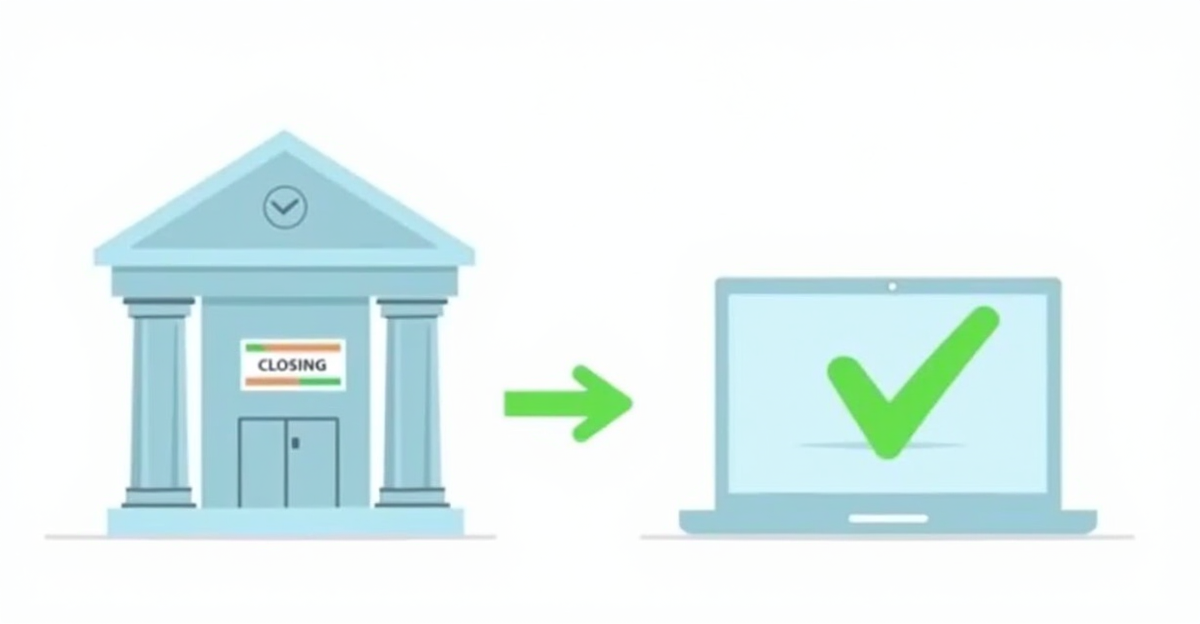
On 31 March 2026, HMRC permanently shut down its free online CT600 filing service. If you're a company director who relied on HMRC's free tool, or if your filing deadline is still coming up, you need to act now — or face serious consequences.
HMRC confirmed the closure in their official communications. There was no extension. From 1 April 2026 onwards, all CT600 submissions must go through HMRC-recognised commercial software.
Here's exactly what you need to do.
Why Did HMRC Close Its Free CT600 Filing Service?
HMRC has been gradually moving away from maintaining its own filing software. The free CT600 filing tool — officially known as HMRC's Company Tax Return service — was available for years, allowing directors of small companies to file directly without paying for software or an accountant.
As part of their digital transformation strategy, HMRC outsourced the filing interface to the private sector. From 1 April 2026, all CT600 submissions must go through HMRC-recognised commercial software.
This means:
- No more free filing through HMRC's own portal
- No grace period — the cutoff was hard on 31 March 2026
- All companies must use third-party software, regardless of size
- iXBRL accounts must still accompany every CT600 (as before)
If you haven't filed your current return yet, or if your filing deadline is still upcoming, you need a plan right now.
Who Is Affected?
Every UK limited company that files a CT600 is affected. But the impact hits hardest for:
Solo Directors and Micro-Companies
If you've been using HMRC's free service to avoid accountant fees, you're the most affected. From now on, you'll need commercial software for every filing.
Companies That Hadn't Filed by 31 March 2026
The free service accepted any return filed on or before 31 March 2026 — regardless of when the formal 12-month filing deadline fell. If you hadn't filed by that date, you now need commercial software, even if your formal deadline hasn't passed yet.
Dormant Companies
If your company is dormant and HMRC has issued you a notice to deliver a Company Tax Return, you must still file — even a nil CT600. However, once HMRC has formally accepted that your company is dormant, no CT600 is required unless HMRC issues a notice or the company becomes active again. See our full guide to dormant company filings for details.
First-Time Directors
If you've just incorporated and haven't filed a CT600 before, you'll need commercial software from day one — HMRC's free tool no longer exists. Check our beginner's guide to CT600 filing for a complete walkthrough.
What Happens If You Don't File?
Let's be absolutely clear about the penalties:
Late Filing Penalties
Two penalty regimes apply depending on when your filing deadline falls:
Returns with a filing deadline before 1 April 2026:
| How Late | Penalty |
|---|---|
| 1 day late | £100 |
| 3 months late | Another £100 |
| 6 months late | HMRC estimates your tax + 10% penalty on that |
| 12 months late | Another 10% of estimated tax |
Returns with a filing deadline on or after 1 April 2026 (the doubled regime):
| How Late | Penalty |
|---|---|
| 1 day late | £200 |
| 3 months late | Another £200 |
| 6 months late | HMRC estimates your tax + 10% penalty on that |
| 12 months late | Another 10% of estimated tax |
For a third consecutive late return, the initial penalties rise to £500 (old regime) or £1,000 (new regime).
These penalties are automatic. HMRC doesn't send a warning — the fine is applied the moment you miss your deadline.
Interest Charges
On top of penalties, HMRC charges simple daily interest on any unpaid corporation tax. The current rate on late payments is 7.75% (Bank of England base rate plus 4%, in effect from 9 January 2026). The longer you wait, the more you owe.
Compliance Actions
Miss enough deadlines and HMRC may:
- Open a compliance check (investigation) into your company
- Issue a determination — where they estimate your tax liability (usually higher than reality)
- Flag your company for future scrutiny
None of this is worth the risk. Filing is mandatory, and the tools to do it are affordable.
Your Step-by-Step Action Plan (Do This Now)
Here's exactly what you need to do:
Step 1: Check Your Filing Deadline
Your CT600 filing deadline is 12 months after the end of your company's accounting period. For example:
- Accounting period ends 31 March 2025 → Filing deadline: 31 March 2026
- Accounting period ends 30 June 2025 → Filing deadline: 30 June 2026
Since HMRC's free service closed on 31 March 2026, any return filed from 1 April 2026 onwards must use commercial software — regardless of when your accounting period ended.
Not sure about your deadline? Check your Companies House profile or log in to your HMRC business tax account.
Step 2: Gather Your Financial Records
Before you can file, you need:
- Profit and loss account for the accounting period
- Balance sheet as at the period end date
- Bank statements (to reconcile your figures)
- Records of all income and expenses
- Details of any capital expenditure (equipment, vehicles, etc.)
- Dividend records (if you paid yourself dividends)
- Director's loan account details (if applicable)
If you use accounting software like Xero, QuickBooks, or FreeAgent, most of this data is already recorded. You just need to make sure it's complete and accurate.
Step 3: Choose Your CT600 Filing Method
You have three options:
Option A: Use Software Like Taxpipe (Recommended)
Cost: £59 + VAT per filing
Taxpipe is purpose-built for company directors who want to file their own CT600 without an accountant. Here's why it's the obvious replacement for HMRC's free service:
- Guided step-by-step process — no tax knowledge needed
- Automatic iXBRL generation — the technical format HMRC requires
- CT600 + accounts filed together — one submission, everything handled
- Real-time HMRC validation — catch errors before you submit
- £59 + VAT flat fee — no subscriptions, no hidden costs
Compare that to the alternatives:
- Accountant: £200–£500+ per year for a basic CT600 filing
- Other software: £100–£300+ with complex interfaces designed for accountants
Option B: Hire an Accountant
If your company has complex tax affairs — multiple income streams, R&D claims, group structures — an accountant may make sense. But for a straightforward limited company with simple trading income, you're paying £300+ for something you can do yourself in under an hour.
See our full cost comparison for a detailed breakdown.
Option C: Use Other Commercial Software
There are other HMRC-recognised CT600 software providers. However, many are designed for accountants, not directors. They're often more expensive and harder to use. We've written a detailed comparison of CT600 software options to help you decide.
Step 4: File Before the Deadline
Don't wait. Here's why:
- Technical issues happen — HMRC's systems occasionally go down near deadlines
- Errors in your return may need time to correct
- You'll sleep better knowing it's done
If you're using Taxpipe, the entire process takes 30–60 minutes for a typical small company:
- Create your account
- Enter your company details (auto-populated from Companies House)
- Enter your financial figures
- Review the auto-generated CT600 (and iXBRL accounts, generated automatically for micro-entity FRS 105 and dormant companies; small company FRS 102 1A accounts are uploaded)
- Submit directly to HMRC
- Receive your confirmation
File your CT600 with Taxpipe for £59 + VAT →
Step 5: Pay Your Corporation Tax
Filing and paying are separate. Your CT600 tells HMRC how much tax you owe. You then need to pay that amount within 9 months and 1 day of your accounting period end.
For example: accounting period ends 31 March 2025 → payment due by 1 January 2026.
Read our complete guide to paying corporation tax for all payment methods.
What If You've Already Missed a Deadline?
If you're reading this and realising you've already missed a filing deadline, don't panic — but do act immediately.
File Now, Even If It's Late
A late filing is always better than not filing at all. The penalties continue to accumulate the longer you wait. File as soon as possible to stop the clock.
You May Be Able to Appeal
If you have a reasonable excuse for filing late — such as serious illness, a natural disaster, or HMRC's own systems being unavailable — you can appeal the penalty. But "I didn't know about the deadline" is generally not accepted.
Consider Amending Previous Returns
If you've filed previous CT600s with errors, you can amend them within 12 months of the original filing deadline. This could save you money if you overclaimed or underclaimed expenses.
Timeline: Key Dates You Must Know
| Date | What Happened / What to Do |
|---|---|
| Before 31 March 2026 | HMRC's free CT600 service was available |
| 31 March 2026 | Free service closed permanently |
| 1 April 2026 onwards | All filings must use commercial software |
| Your company's deadline | 12 months after accounting period end — check yours now |
How Taxpipe Replaces the HMRC Free Service
Taxpipe was built specifically for directors who were using HMRC's free filing service. Here's how we compare:
| Feature | HMRC Free Service | Taxpipe |
|---|---|---|
| Cost | Free (closed March 2026) | £59 + VAT per filing |
| iXBRL accounts | You had to create separately | Generated automatically for micro-entity (FRS 105) and dormant companies; small company (FRS 102 1A) accounts can be uploaded |
| Guided walkthrough | Basic | Step-by-step with help text |
| Error checking | Minimal | Real-time validation |
| Support | None | Email support included |
| Available after March 2026 | ❌ No | ✅ Yes |
The transition from HMRC's free tool to Taxpipe is straightforward. If you could use HMRC's system, you can use Taxpipe — it's designed to be easier, not harder.
What About Dormant Companies?
If your company is dormant and HMRC has issued a notice to deliver a Company Tax Return, you still need to file — a nil CT600. You must also file dormant accounts with Companies House (a separate requirement).
If HMRC has formally accepted your company as dormant and has not issued a notice to deliver, no CT600 filing is required until the company becomes active again.
Taxpipe handles dormant company filings too. The process is even simpler — enter your company details, confirm no trading activity, and submit. Still just £59 + VAT.
Don't Leave It Until the Last Minute
Here's what happens every year on the final day before major HMRC deadlines:
- HMRC systems slow to a crawl
- Commercial software support queues are hours long
- Directors panic-file with errors that trigger compliance checks
File at least 2 weeks before your deadline. If there's an error, you'll have time to correct and resubmit.
Use the Taxpipe Calculator to See What You Owe
Not sure how much corporation tax your company owes? Our free CT600 calculator gives you an instant estimate. Enter your revenue, expenses, and we'll show you:
- Your estimated corporation tax liability
- Which CT600 boxes your figures go in
- Whether you qualify for any reliefs
FAQ
When did HMRC's free CT600 filing service close?
HMRC's free Company Tax Return filing service closed permanently on 31 March 2026. From 1 April 2026, all companies must use HMRC-recognised commercial software or an accountant to file their CT600.
What is the cheapest way to file a CT600 now?
The most affordable option is Taxpipe at £59 + VAT per filing. This includes your CT600 return and iXBRL-tagged accounts submitted directly to HMRC. Accountants typically charge £200–£500+ for the same service.
Can I still file my CT600 for free?
No — HMRC's free filing service closed on 31 March 2026. Taxpipe at £59 + VAT is the most affordable alternative.
What happens if I miss my CT600 filing deadline?
The penalties depend on when your filing deadline falls. For deadlines on or after 1 April 2026: an automatic £200 penalty the day you miss the deadline, then another £200 if you're still late at 3 months. After 6 months, HMRC can estimate your tax bill and charge 10% of unpaid tax; after 12 months, another 10%. For deadlines before 1 April 2026, the initial penalties were £100 and £100.
On top of filing penalties, HMRC charges simple daily interest on any unpaid tax at 7.75% (from 9 January 2026).
Do dormant companies need to file a CT600?
Only if HMRC has issued you a notice to deliver a Company Tax Return. Once HMRC formally accepts your company as dormant, no CT600 is required until the company becomes active again. You must still file dormant accounts with Companies House separately. See our dormant company filing guide for full details.
How long does it take to file a CT600 with Taxpipe?
Most directors complete their CT600 filing in 30–60 minutes using Taxpipe. The guided process walks you through each section. For micro-entity (FRS 105) and dormant companies, iXBRL accounts are generated automatically; small company (FRS 102 1A) accounts can be uploaded.
Is Taxpipe HMRC-recognised software?
Yes. Taxpipe is recognised by HMRC for CT600 filing and submits your return directly to HMRC via their secure API. You'll receive an official acknowledgement from HMRC confirming your submission.
Take Action Now
The service has closed. The free option is gone. And the solution is simple.
- Check your filing deadline — do it today
- Sign up for Taxpipe — takes 2 minutes
- File your CT600 — guided process, about 30-60 minutes
- Pay your tax — separately, by the payment deadline
Don't be one of the thousands of directors still scrambling for a solution after the service closed. Get your filing done now.
File your CT600 for £59 + VAT with Taxpipe →